Friday, September 23, 2011

Hindu Cremation Ceremony

Ronnie is guest blogging for me today. We had no idea when we planned our trip to Bali last weekend that we would be attending a Hindu cremation ceremony. Apparently these ceremonies are only held once every 3 years, as Hindus must wait for enough bodies to perform such a ceremony. We observed many open graves (where bones of people who have died since the last ceremony had been retrieved) and from our counting there appeared to be maybe 23 or 24 people cremated that day.


 person of most important stature arrives in one procession 
“As they make their way to the coast to spread the ashes over the water, the people will make all four turns on a market square to confuse the soul of the dead, ensuring that it cannot find its way back to the body.”—Hotel Concierge.

 bones of deceased wrapped in white cloth
 remains placed inside various animals to be burned
mass procession of family members coming from opposite direction
flow of humanity
bringing offerings
offerings are brought to be cremated along with bones


On successive days, Jan and I witnessed one small and one very large Hindu cremation ceremony in Ubud, Bali. While riding bikes through the rice fields outside Ubud we happened on the tail end of one ceremony where an individual from the “priest” caste was being cremated. I made a short video of the music as the fire burned hot and long enough to reduce the bones to ashes (Cycling Ubud, Pt 2). Later the family would gather the ashes and spread them over the ocean waters in Bali Sea.


 open grave - notice wood, gasoline and general trashiness of cemetery

contained water to be put inside with bones
wonder if these were husband and wife?
many carried framed photos of the dead
surrounding the crematory animal with gifts or offerings to be burned
bringing more unearthed bones


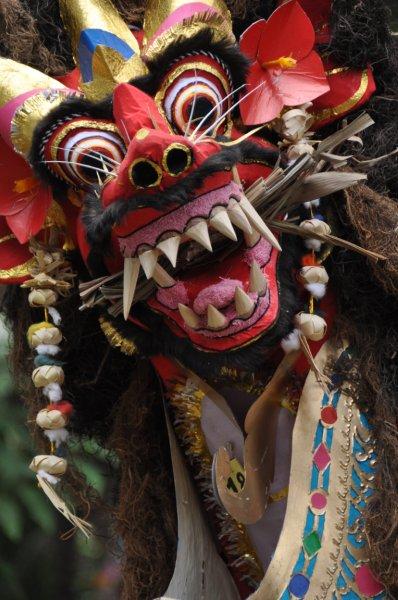
A ceremonial bull is used (see photo) to hold the bones of the dead person, along with other memorabilia. Wood is placed around the bull and gasoline is added to get the whole thing burning quickly. There were roughly 20 such bulls in the mass ceremony we witnessed and a few others shaped as elephants, pagodas, etc.

more containers carrying bones of the deceased
transferring bones into animal to be burned
A sea of humanity including the families carrying the bones of the dead (which had recently been dug up - see photo of opened grave) flowed to the waiting bulls from a nearby holding area.  Everyone crowded around as the men worked feverishly to insert the bones and to make ready for the fire. When the last one was finished, they all went up in flames together. All the people left at that point and so did we. Later I suppose the families returned for the ashes to start their meandering journey to the coast.
after all offerings are placed, cremation fires are started
Personally, I wept at the site of the people and their futility. Some were hurting with grief with no hope. Others were stoic and watched with blank faces. Many simply carried out their ceremonial duties. I cried out to the Living God on behalf of the people and even prayed for rain to dowse the flames. None came.

The whole scene was a cornucopia of sights, smells and sounds as you can imagine by looking at the photographs included here.

people leave quickly due to intense heat and smoke


Next Post: I took so many photos at the ceremony, I decided to post an addendum called "The Faces of Hinduism."

Thursday, September 22, 2011

Little Altars Everywhere!

tiny offerings for sale


There was nothing else I could title this one, as this pretty much says it all. Last weekend during our visit to Bali, I was quite taken back at the number of small offerings that appear on just about every surface you can see. These tiny arrangements can be seen on carved statues, in special "houses" made just for such offerings, on sidewalks, counter tops - pretty much any and every flat surface available.


incense and rice - common ingredients
accompanied by drink offering


woman prays before placing offering
dominant foreground, contributing background

typical altar
placing an offering

double duty
Flowers are an important part of any offering made to the Hindu deities. These tiny "offerings" are usually made on a base of woven palm or coconut and contain various components such as cooked rice, flowers, incense, small crackers, nuts and such. It is not unusual to see a cigarette placed in one, as if someone is sacrificing their addiction to their god? At least that’s my interpretation. On a side note - it seems like pretty much every male in Indonesia smokes. Children smoke and boys and men of all ages smoke. It would appear that pretty much everyone is addicted to nicotine. I've seen only one female with a cigarette in the 7 weeks we've been here. But it's rare to see a man who isn’t smoking. I digress...

any nook or cranny, three deep


plumeria blooms abound

varying styles of handiwork
As I was saying, these little offerings are virtually everywhere and you can step on them if you're not careful. There are fresh ones and  trashed ones lying side by side on the sidewalks, streets, curbs and garbage areas. These tiny offerings (called ‘canang sari’) are offered to their gods three times a day - no wonder there are so many! I read on one website that an estimated 3-4 million offerings are rendered every day in Bali!!

cigarette offering?
I also found the following tidbit. “These tiny offerings supposedly appease the spirits and bring prosperity and good health to the one offering them. Each morning, women walk with incense and pray, leaving these small offerings at shrines or on the sidewalk in front of the shops. These gifts to the gods are refreshed or replaced throughout the day, so if you do happen to kick one over, don't worry. Balinese simply assume it was the result of a spirit passing through.” Uh huh.

sidewalk threesome
a tiny offering

restaurant is open

I realize this many photos may seem like overkill, but I'm trying to make the point that the Balinese people's lives are governed by their ritual observances, one of which is evidenced by the making and placing of these many small offerings throughout each day.
open for business
sidewalk duty
maybe more is better?
massages here

Wednesday, September 21, 2011

A Visit to Satria Agrowisata

Asian Palm Civet
After our visit to the village school in Ubud, our guide took us to visit a coffee plantation, famous for its Luwak coffee. Sometimes called Kopi luwak or civet coffee, it's one of the world's most expensive coffees. If you're looking for a little something different, this would be it. I was going to purchase a sample bag for the coffee connoisseur in our family, but then I discovered it was about $30US for enough to make 10 cups. Instead of a souvenir package, I decided she would like to have a photo instead. Sorry, Carrie!


these beans need a little more work
cleaned and ready for roasting
coffee anyone?
Luwak coffee is, shall I say, "manufactured" a little differently than other coffee beans. The beans are grown on coffee plants just like any other beans, but then they are eaten by a critter called the Asian Palm Civet (also called toddy cat). The beans then pass through the animal's digestive track where they become fermented, then are pooped out whole. There are people whose job it is to collect this type of cat poo in order to harvest the beans. The beans are then roasted and ground like any other coffee beans and wala! You have Luwak coffee!

If you really must know more, you can read up at http://en.wikipedia.org/wiki/Kopi_Luwak.

hand roasting the coffee beans over wood fire


now THIS is a coffee grinder!
papaya tree
passion fruit blooms and fruit
drying spices
our guide with guess what? marijuana
ever seen how guavas grow?

 In addition to coffee plants, there are many varieties of tropical fruits and trees on the property. Ever wonder where cloves come from? Vanilla? Cinnamon? You can see these trees and plants on the property. These are all harvested and made into teas, coffee, spices, soaps, lotions, creams, etc.

At the end of the walk through the "garden" area, we were treated to samples of Bali coffee, gingseng coffee, cocoa, ginger tea, rosela tea, lemon grass tea, vanilla coffee and rice tea. Like with any tourist spot, it was a cheap marketing attempt to sell products. Of course it worked. I bought pure organic cocoa, ginseng coffee and lemon grass tea. The Luwak coffee was not among the samples but we were offered the opportunity to try it. After each taking one whiff, we politely declined their kind offer.

will you taste a sample?